

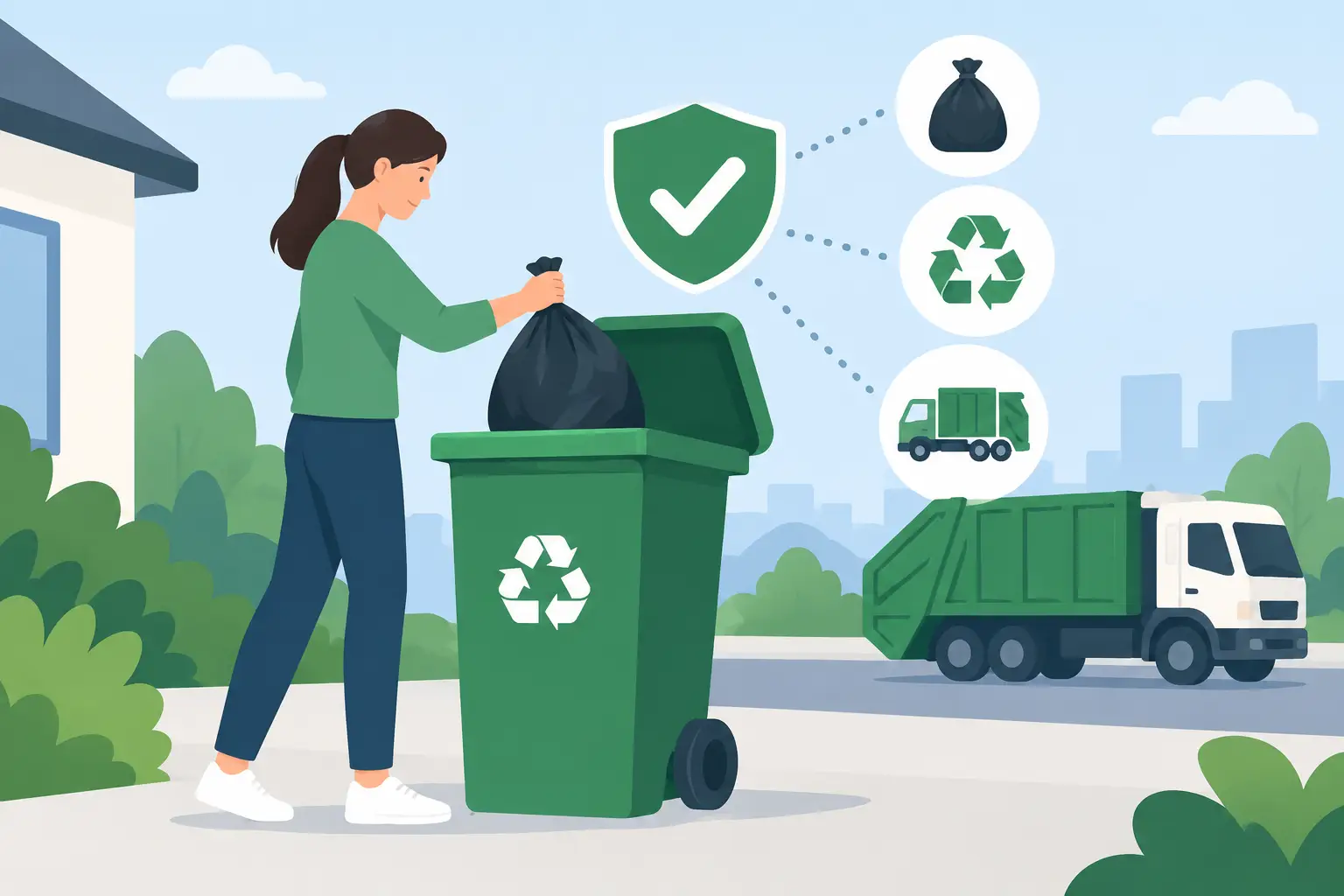
A man with a van takes away an old sofa, bags of household rubbish and broken fence panels. The drive is clear, cash has changed hands, and the job looks done. But if that waste later turns up in a lay-by or field, it may still come back to you.
That is why customers often ask what proves legal disposal. The short answer is a clear paper trail showing that your rubbish was collected by an authorised waste carrier and passed into the proper waste system. You do not need to become an expert in waste law before clearing a shed or renovating a kitchen. You do need to take a few sensible checks before anyone loads your rubbish onto a lorry.
For a householder, the best proof is not one magic document. It is a combination of written records that shows who took the waste, when they collected it and why they were allowed to carry it.
Start with the waste carrier’s registration. Anyone who transports waste as part of their business should be registered with the Environment Agency. Ask for their registration details, then check that the registration is current before booking. A genuine local operator should be happy to provide this information.
Next, keep your quote, booking confirmation, invoice or receipt. It should show the business name, collection date, the address where the waste was collected and a useful description of the job, such as household clearance, garden waste removal or renovation debris. A paid receipt with no company details is weak evidence. A written record from a traceable business is far more useful.
Where appropriate, a waste transfer note may also be used. This records a transfer of waste between parties and gives details such as the waste type, quantity and the carrier involved. It is a key document for many business waste transfers. For a straightforward domestic collection, the customer may receive an invoice or collection record rather than a separate transfer note, but you can always ask what paperwork will be provided.
The point is simple: keep enough information to show that you acted reasonably and used a legitimate service.
Most people would never knowingly pay for fly-tipping. The problem is that cheap, unregistered collectors can make the same promises as a proper business, then avoid disposal charges by dumping the load illegally.
Under the household duty of care, you must take reasonable measures to make sure your waste is only passed to an authorised person. If investigators find evidence linking rubbish to your home, saying that somebody offered a cheap collection is unlikely to settle the matter on its own. The council or Environment Agency will want to know who removed it and what checks you made.
This does not mean every homeowner needs files of technical waste documents. It means using common sense. Choose a known, licensed operator, get the arrangement in writing and retain the receipt. Those small steps protect you if there is ever a question about where your waste went.
Keep your paperwork together for at least two years. A folder, email archive or photographs of the documents on your phone will do. The useful records are:
Photos can help too, especially for a larger clearance. Take a few before collection and one once the rubbish has been loaded. They are not proof of legal disposal by themselves, but they can support your records by showing what was removed and when.
For landlords, letting agents and people clearing a probate property, the paper trail is even more worthwhile. There may be several people involved, a property may be vacant, and questions can arise months later. Keep the booking details with the property records rather than relying on a text message that could disappear.
A legal waste carrier will not usually make the process difficult. Before agreeing to a collection, ask for the business name and Environment Agency registration. Check that the details match the person or company you are dealing with. If they trade under a different name, ask for a quick explanation.
Be wary if somebody will only deal in cash, refuses to give an address or invoice, or pressures you to book immediately. A low price can be tempting when the garden is full of bags or a renovation has left rubble everywhere, but disposal costs money. A price that seems far below every other quote may be a warning that the waste is not going where it should.
Also be clear about what is being collected. General household rubbish, green waste, wood, metal and old furniture are one thing. Paint, chemicals, gas bottles, asbestos, tyres, batteries, electrical items and fridges can need different handling. A responsible collector will explain what they can accept, what needs separate arrangements and whether the quote changes for particular items.
There is a trade-off between the absolute cheapest option and the option that gives you confidence. Paying a fair, agreed price to a licensed local business is often cheaper than dealing with the consequences of an illegal collection.
Not all receipts offer the same protection. “Rubbish removal – £80” written on a scrap of paper is better than nothing, but it leaves plenty of unanswered questions. Who carried the waste? Which address did it come from? What was collected? Was the person authorised?
A proper invoice or receipt should make those answers easy to find. Look for the company name, contact details, collection date, your address, the amount paid and a sensible description of the service. If the collector has quoted by text or email, save that as well. Together, the quote and receipt form a useful record of the agreement.
Do not assume a council tip receipt proves that your particular waste was legally handled unless it clearly links to the collection. Disposal sites deal with many loads each day. The strongest evidence is the full chain: a registered carrier, a written booking and payment record, plus any transfer paperwork available.
A skip does not remove your responsibility to use the right provider. When you book a skip, make sure the hire company is established, provides confirmation of the hire and can explain what can and cannot go inside. Keep the booking email or invoice until the skip has been collected and the account is settled.
Placement matters too. A skip kept wholly on private land normally avoids the issue of a roadside permit. If it will sit on a public road, pavement or verge, permissions and safety requirements may apply. Do not assume these arrangements are included – ask before delivery. The answer can depend on the exact location and your local council’s rules.
For households across Sudbury, Colchester, Hadleigh, Ipswich and Bury St. Edmunds, Box Rubbish Removal provides clear booking details and operates as an Environment Agency licensed waste carrier. Whether you need a collection or booked skip hire, ask questions before the job starts and keep the paperwork afterwards. It is a small bit of admin that helps ensure your clear-out stays properly dealt with.

Do you need a reliable local rubbish clearance and/or skip hire company in Sudbury or Colchester? Then you’re in the right place.

