

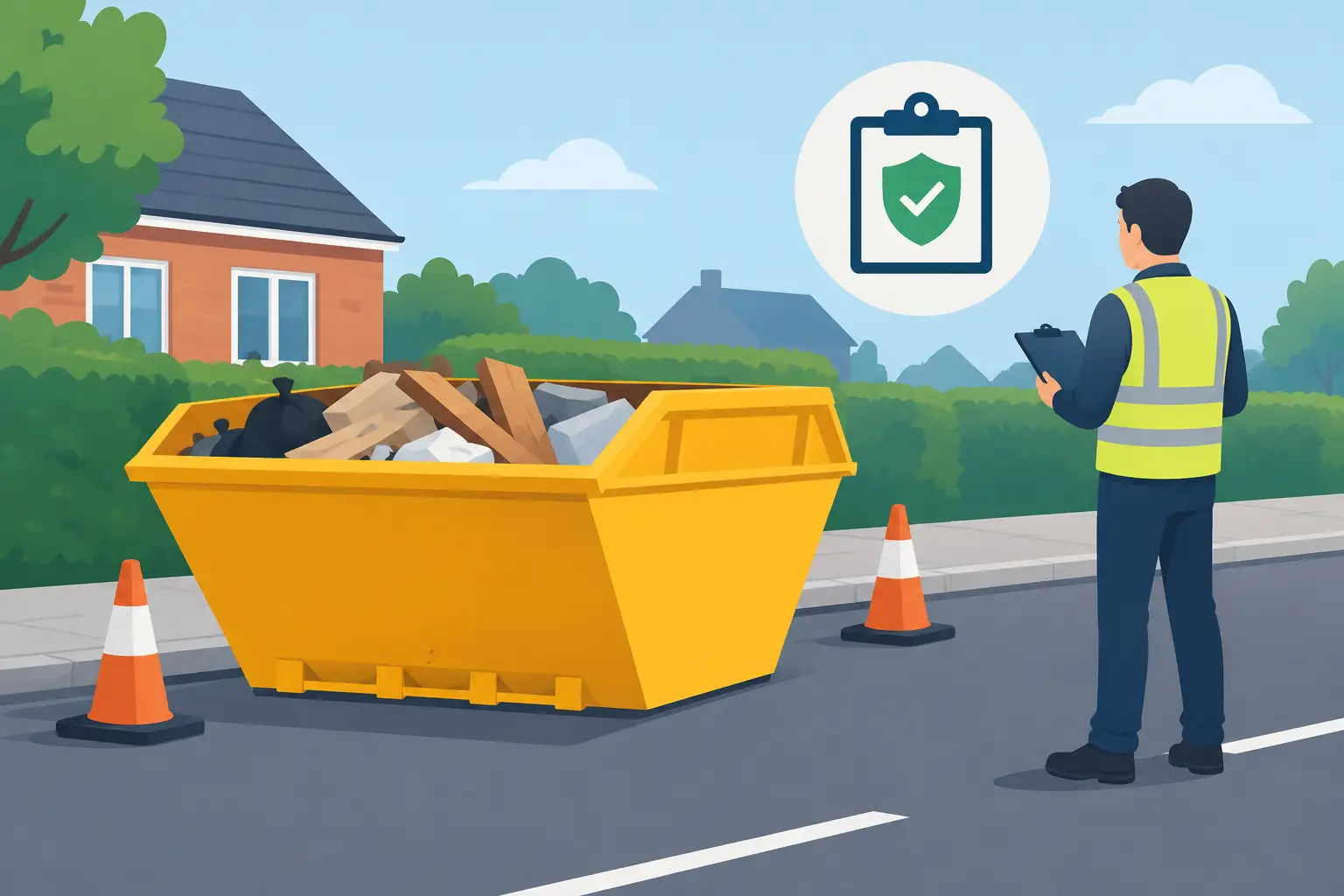
A skip can make a clear-out, garden project or renovation far easier, but where it sits matters just as much as its size. So, are skip permits needed? Usually, yes, if the skip will be placed on a public road. If it can stay wholly on private land, such as a driveway or front garden with suitable access, a council permit is normally not required.
The key is to sort this out before the skip arrives. A skip placed in the wrong spot can cause delays, extra charges and a frustrating last-minute change of plan. Here is the straightforward way to work out what you need.
In most cases, no. A skip positioned entirely on land you own or are allowed to use does not need a highway permit. That includes a driveway, private yard or other off-road space, provided the delivery and collection lorry can get in safely.
This is often the simplest option. There is no need to wait for a council decision, and you avoid the restrictions that can apply when a skip sits on the road. It can also make delivery easier where there is limited parking or a busy street.
Private land still needs to be genuinely private. A shared access road, communal parking area or private estate may have its own rules. If you rent your home, live in a flat, or use shared parking, check with your landlord, managing agent or freeholder first. Do not assume a space is yours to use just because you park there.
It is also worth measuring the available space. The skip must not overhang the pavement or carriageway, block a neighbour’s access, or leave the collection lorry unable to approach it. Low branches, parked cars, narrow gates and overhead cables can all affect whether a drop-off is practical.
A permit is normally required when any part of the skip will be placed on the public highway. This usually means the road, but it can also include a lay-by, verge, pavement or public parking bay. The council or highway authority issues the permit because the skip affects road safety, parking and access for other road users.
The permit process varies by area. In and around Sudbury, Colchester, Hadleigh, Ipswich and Bury St. Edmunds, the relevant local authority will look at the exact road and proposed location. Some roads are straightforward, while others have restrictions because of traffic levels, parking controls, bus routes, roadworks or nearby junctions.
In practice, the skip provider will usually apply for the permit. However, you should confirm this when booking rather than assuming it is included. The customer still needs to provide the correct address, explain where the skip is intended to sit and allow enough time for approval.
A permit is not normally something you can arrange on the morning the skip is due. Council processing times differ, and a permit may take several working days. If you have builders starting on a set date or a house move booked, plan ahead. Booking a skip before checking the permit position can leave you with waste ready to go but nowhere lawful to place the container.
A skip permit does not automatically reserve a parking space. If you need to place the skip in a controlled bay or an area where residents usually park, a parking suspension may also be needed. This is a separate arrangement and can take additional time.
Likewise, a permit does not give permission to block a driveway, obstruct dropped kerbs or restrict safe access for pedestrians. The exact conditions will be set by the authority, and the skip must be positioned in line with them.
The licensed skip operator is generally responsible for putting a skip on the highway legally, including applying for the relevant permit and meeting the conditions attached to it. That said, the householder plays an important part by giving accurate information.
Tell the provider if the skip will be on the road rather than your drive. Mention permit parking, narrow streets, schools, bus stops, sharp bends and any access issues. A clear description or photograph of the proposed location can prevent problems before delivery day.
Do not move the skip after it has been placed. The permit relates to a particular location, and moving it a few metres down the road can still create an issue. If the location changes, speak to the provider first.
A roadside skip has to be visible and safely managed. The provider may need to use cones, reflective markings and warning lights, particularly during poor visibility or at night. The skip should not be overfilled, as loose waste can fall into the road or create a hazard during collection.
The council may also set limits on how long it can remain in place. A short project may only need a brief permit period, while a larger renovation could need an extension. Extensions should be arranged before the existing permit expires, not after.
There are some areas where a roadside skip may not be allowed at all. Busy roads, red routes, narrow streets and locations near junctions are common examples. If that applies to your property, private-land placement, a rubbish collection service or a scheduled skip that is collected promptly may be a better fit.
Whether your skip is on a driveway or a public road, waste rules still apply. General household waste, garden cuttings, old furniture, wood, soil and renovation debris are commonly accepted, subject to the service booked.
Some materials need separate handling and must not be put in a standard skip. These often include asbestos, gas bottles, paint, tyres, batteries, electrical items, fridges and freezers, chemicals, oils and other hazardous waste. Plasterboard may also need to be kept separate because of disposal requirements.
Ask before loading anything you are unsure about. It is far easier to deal with a restricted item beforehand than to have collection delayed because the wrong waste has been added. If a skip is overfilled or contains prohibited materials, additional charges may apply and the driver may be unable to take it away safely.
Not necessarily. A skip works well when you have enough waste to fill it, space for safe placement and a project that runs over several days. It gives you time to load at your own pace, which can be useful for a shed clear-out or home refurbishment.
For a smaller pile of unwanted items, or where there is no driveway and a roadside permit would be awkward, a rubbish collection can be the simpler answer. The waste is loaded and removed without a container sitting outside your home. This can be particularly useful for bulky furniture, bagged household rubbish, garden waste and garage contents.
There is also the question of access. A property may have a private driveway but still be unsuitable for a skip lorry because of tight turns, weak surfaces or parked vehicles. A good local operator will ask the right questions rather than promising a delivery that cannot be completed.
First, decide exactly where the skip will sit. If it is on your drive, measure the space and make sure the delivery route is clear. If it is on the road, ask whether a permit and possibly a parking suspension will be required.
Next, think about timing. Allow for permit approval before arranging builders, ordering materials or starting a clear-out. Finally, be clear about the waste you have, how much there is and whether any items need specialist disposal. These three checks make the booking process much quicker and help avoid surprises on collection day.
Usually not without specific approval, and in many places it will not be permitted at all. Pavements need to remain safe and accessible for pedestrians, pushchairs and wheelchair users. Never arrange for a skip to be placed there without checking first.
Yes, but only with their clear permission. The skip must fit fully within their boundary, and the surface and access route need to be suitable for the delivery lorry. It is sensible to agree how long it will remain there before booking.
A man-and-van style rubbish collection may be more suitable than waiting for a roadside permit. Box Rubbish Removal offers local collections and skip hire across the area, helping households choose the practical option for their space, waste and timescale.
A quick check of the proposed location before you book can save days of delay. If a skip can stay on private land, the job is usually much simpler. If it needs to go on the road, allow time for the correct permit and let the provider handle the details properly.

Do you need a reliable local rubbish clearance and/or skip hire company in Sudbury or Colchester? Then you’re in the right place.

