

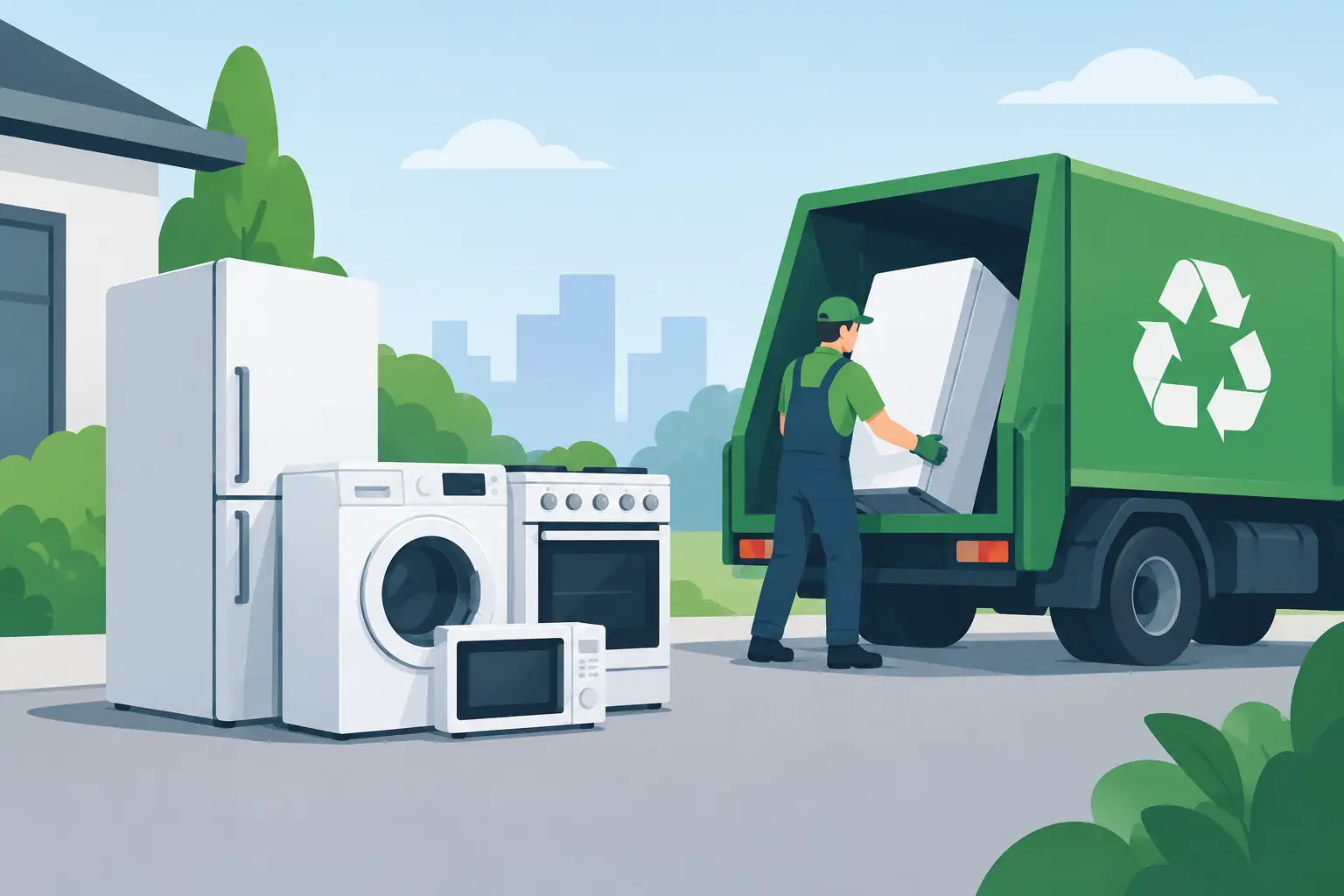
An old washing machine can sit in a garage for months because it is too heavy for the car, too awkward for the bin and too useful-looking to simply throw away. White goods disposal does not need to become another job on the list. With the right collection option, your unwanted appliance can be removed safely, legally and without a trip to the tip.
White goods are the larger electrical appliances found in most homes: washing machines, tumble dryers, cookers, fridges, freezers, dishwashers and similar items. They cannot go in your household wheelie bin or a general rubbish sack. Many contain materials that need proper treatment, while some can create a safety risk if stored or moved incorrectly.
Most white goods come under WEEE regulations, short for Waste Electrical and Electronic Equipment. Put simply, electrical items should be handled through an appropriate recycling or disposal route, rather than mixed in with ordinary household waste.
This is not just paperwork. Appliances contain recoverable metal, plastic, glass and electronic parts. Fridges and freezers may also contain refrigerants and insulation materials that need specialist handling. When disposed of properly, useful materials can be recovered and hazardous components are dealt with in the correct way.
Leaving an appliance at the roadside, beside a communal bin area or in a lay-by is fly-tipping, even if you intended somebody else to collect it. Local authorities can issue substantial fines, and an appliance dumped outside can quickly become a nuisance for neighbours. It is always better to have a clear plan before disconnecting the old machine.
The best route depends on the appliance, how quickly you need it gone and whether you are already clearing other household waste.
If you have a suitable vehicle, can safely load the appliance and have the time, a local household recycling centre can be a practical option. Check the site rules before setting off. Some centres have booking requirements, vehicle restrictions or limits on certain types of waste.
This option can suit a small dishwasher or washing machine if you have help to lift it. It is less convenient for a tall fridge-freezer, a heavy range cooker or a full house clearance where one item is only part of the job.
When buying a replacement appliance, many retailers offer a collection service for the old one. This can be convenient as the delivery team may remove the appliance when they bring the new model.
Always check what is included before ordering. Take-back may carry a charge, may only apply to a like-for-like item, and may require the old appliance to be disconnected and ready at ground-floor access. If your old machine is in a shed, utility room or upstairs flat, another option may be easier.
For most households, a booked collection is the straightforward choice. A licensed waste carrier can collect the appliance from your property alongside other unwanted items, saving you from finding a vehicle, lifting heavy goods or making several trips to the recycling centre.
This is particularly useful after a kitchen refit, a tenant changeover, a garage clear-out or when an appliance has broken down unexpectedly. Box Rubbish Removal provides local collections across Sudbury, Colchester, Hadleigh, Ipswich and Bury St. Edmunds, with a simple quote and booked time to keep disruption to a minimum.
A skip can work well where white goods are part of a wider renovation or clearance. If you are removing old kitchen units, flooring, packaging, timber and general household rubbish at the same time, having a skip on site gives you room to work at your own pace.
However, do not assume every appliance can go into every skip. Fridges and freezers often need separate handling, and skip providers may have restrictions on electrical items. Ask before booking so there are no surprises when the skip arrives or is collected.
A little preparation makes collection safer and quicker. First, empty the appliance completely. Check washing machine drums, dishwasher racks, freezer drawers and oven compartments carefully. It is easy to leave behind cutlery, paperwork, food or cleaning products.
Disconnect the appliance according to the manufacturer’s guidance. For washing machines and dishwashers, turn off the water supply, disconnect the hoses and drain any remaining water. A towel and shallow tray can help catch drips. Secure loose hoses, doors and cables where possible so nothing catches while the item is being moved.
Fridges and freezers need extra care. Empty them, switch them off well ahead of collection and allow them to defrost with the doors open. Put towels around the base to catch water. Do not damage cooling pipes or try to remove any refrigerant yourself. Once defrosted, wipe the inside clean to prevent unpleasant smells.
For cookers, particularly gas cookers, safe disconnection matters. A gas appliance should be disconnected by a suitably qualified Gas Safe engineer. Do not cut pipes or attempt a DIY disconnection simply to get the cooker out quickly.
If possible, make a clear route from the appliance to the door. Move mats, shoes, boxes and small furniture out of the way. Let the collection team know about stairs, narrow access, basement locations or parking limitations when arranging the job. Clear information helps avoid delays and makes sure the right lifting arrangements are in place.
A cheap offer on social media can be tempting when you need an old appliance gone today. But if the person collecting your rubbish is not properly licensed and later dumps it, you could still be investigated. Your duty of care does not end when the item leaves your driveway.
Use a legitimate, Environment Agency licensed waste carrier and keep any receipt, booking confirmation or waste transfer documentation you are given. A reputable provider will be clear about what they can collect, whether an item needs special handling and how the job will be priced.
Be wary of anyone who avoids basic questions, insists on cash with no record, or offers to take everything without checking what is included. Reliable disposal is worth more than a bargain that could lead to a fly-tipping problem later.
Disposal is not always the first answer. If an appliance still works safely, is clean and has plenty of life left, selling it, giving it to a neighbour or passing it to a local reuse project may be a good choice. This can be especially worthwhile for newer washing machines, cookers and dishwashers.
That said, reuse only makes sense when the appliance is safe, complete and genuinely useful. A fridge with a failing seal, a cooker with electrical faults or a washing machine that leaks is better handled through the correct disposal route. Do not pass on a problem that will simply become someone else’s rubbish.
For one small appliance and easy transport, the recycling centre may be enough. For a replacement delivery, retailer take-back may be simplest. For heavy appliances, several unwanted items or limited time, a booked rubbish collection is often the least stressful route. And for a full renovation, skip hire can make sense if the provider accepts the items you need to clear.
The key is to check first rather than leave an old appliance blocking the kitchen, garden or driveway. Arrange collection, prepare the item safely and use a trusted local service. Then the space is clear for the new appliance, the next stage of your project, or simply a tidier home.

Do you need a reliable local rubbish clearance and/or skip hire company in Sudbury or Colchester? Then you’re in the right place.

