

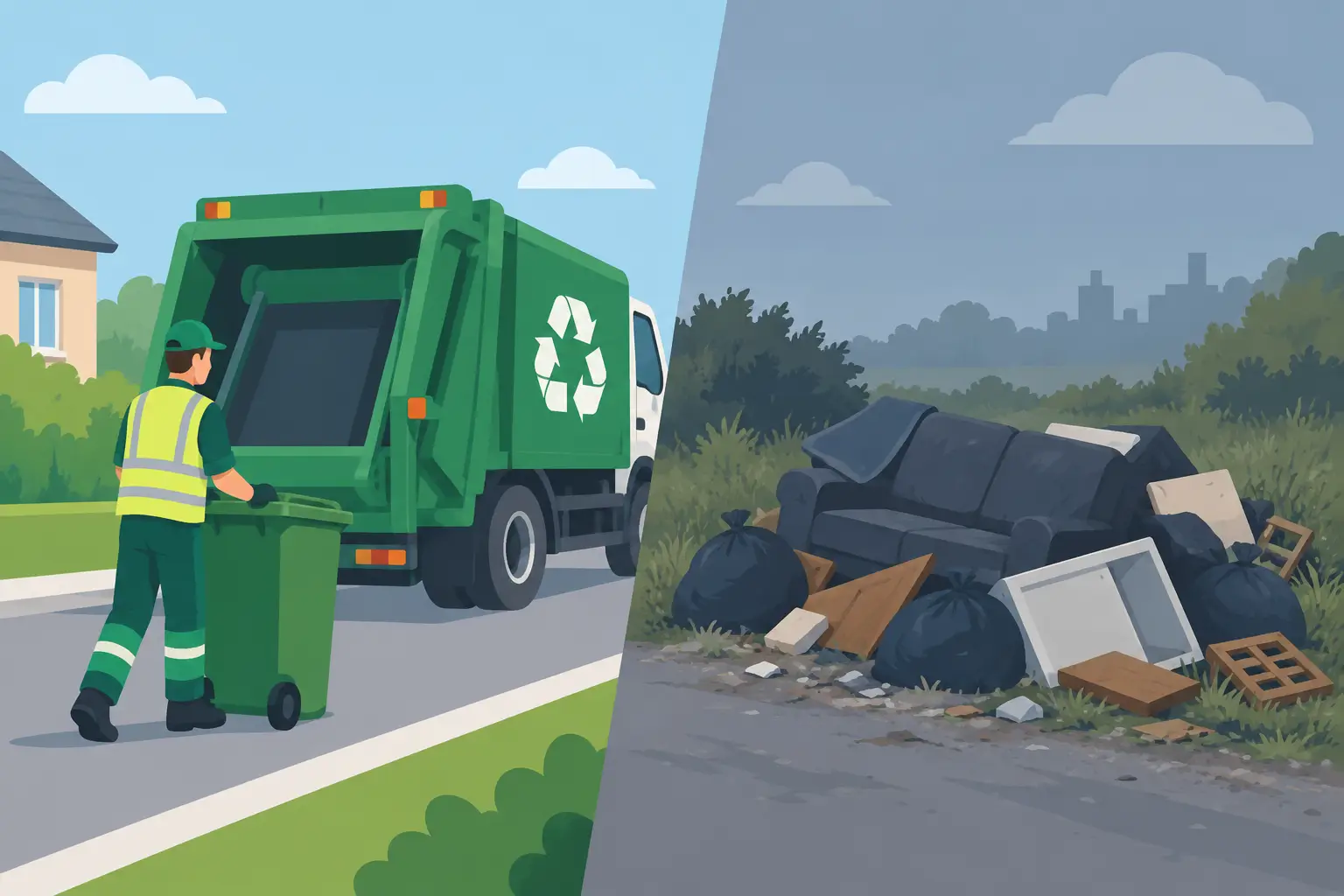
A cheap offer to take away a pile of rubbish can quickly become expensive if it ends up in a field, lay-by or country lane. That is the real difference in licensed collection versus fly tipping: one gives your waste a legal, traceable route, while the other can leave the householder facing questions, stress and potentially a fine.
When you are clearing a shed, renovating a kitchen or dealing with a tenant move-out, the priority is usually getting the mess gone. Fair enough. But how your rubbish leaves the property matters just as much as how quickly it is loaded. A proper local collection should be simple, fairly priced and handled by a registered waste carrier.
Fly tipping is the illegal dumping of waste. It can be a black bag left beside a public bin, a mattress abandoned on a verge, or a vanload of building debris tipped on private land. It is not limited to large-scale dumping and it is not made acceptable because the person responsible says they were trying to help.
The mess is obvious, but the damage goes further. Fly-tipped waste can block access, attract pests, harm wildlife and create a nuisance for neighbours. It costs local authorities and landowners money to investigate and clear, which is one reason enforcement can be serious.
There is another point that catches people out: paying somebody else to remove rubbish does not automatically remove your responsibility. If your items are traced after being illegally dumped, you may be asked to show who collected them and where they were meant to go. Choosing the first cheap advert without checking the basics is a risk not worth taking.
A licensed collection starts with accountability. The collector should be registered to carry waste and should take it to an authorised facility or arrange for it to be handled through the proper waste chain. There is a record of the job, clear communication and a business that can be identified if you need to ask a question.
Fly tipping is the opposite. Waste is taken with no proper disposal plan, dumped where it should not be, and the person responsible often disappears. The initial price may look tempting, particularly after a costly refurbishment, but it is not a saving if the rubbish is later found with your address or name among it.
For most household jobs, the choice does not need to be complicated. Use a reputable, Environment Agency licensed waste carrier, agree what is being collected, and keep any paperwork or confirmation you receive. That gives you a sensible record that you took reasonable steps to dispose of your rubbish correctly.
A reliable service will be clear about the waste it can take, the price or quote, and the collection time. You should not be pressured into paying cash with no receipt or asked to leave everything outside without knowing who is collecting it.
For larger clearances, a waste transfer note may be provided. This records the transfer of waste from you to the carrier. Keep it with your booking confirmation, invoice or receipt. It is a small piece of admin that can be very useful if there is ever a query.
A legitimate operator will also explain if certain items need separate arrangements. Some waste cannot simply be mixed into a general collection because it needs specialist handling. This can include asbestos, gas bottles, chemicals, paint, tyres, fridges and freezers, batteries and some electrical items. Straight answers are a good sign. A company claiming it can take absolutely anything, no questions asked, should make you cautious.
You do not need to turn a simple clear-out into a research project. A few quick checks can help you avoid a bad decision. Ask whether the business is registered with the Environment Agency as a waste carrier, broker or dealer, and ask for its registration details if they are not clearly available.
Check that the business has a proper name, contact number and local presence. Look for clear information on what is included in the service and what happens to the waste. Reviews can be helpful too, especially when they mention punctuality, communication and the condition in which the team left the property.
Be wary of prices that seem far below every other quote. A lower price is not automatically suspicious – smaller jobs, easy access and local availability can all affect the cost – but an unrealistic price can mean disposal has not been properly allowed for. Ask whether loading, labour and disposal are included before work begins.
It is also sensible to take a quick photograph of the waste before collection and make a note of the vehicle registration if you have any doubts. Most customers will never need these details, but keeping a basic record is good practice.
Licensed disposal has costs. A genuine operator has to pay for staff, fuel, vehicle upkeep, insurance, disposal charges and compliance. That is why responsible rubbish removal is not always the cheapest option advertised on social media or a leaflet through the door.
However, proper collection can still be affordable. The right option depends on the amount of waste, access to the property and how quickly you need it gone. A few bags or unwanted household items may suit a man-and-van style collection. A full garage, garden clearance or refurbishment project may be better with a skip.
Skip hire can be particularly practical when you want to clear items over a few days rather than have everything ready at once. If the skip can be placed on private land, such as a drive, you can avoid the complications that may come with putting a skip on the road. You still need to check what can go in it and make sure it is filled safely, but it gives you a clear, legitimate route for the job.
House clearances are a common problem. A landlord needs a flat emptied between tenancies, or a family is clearing a relative’s home, and there is pressure to get it done quickly. In that situation, a stranger offering to take everything away for a very low cash price can sound convenient. It can also leave a trail back to the property if the load is dumped.
Garden waste causes similar issues. Old fencing, soil, branches, broken furniture and bags of green waste can soon fill a car. Putting it in someone else’s van is only a solution if that person is taking it to the right place. The same applies to builders’ waste from a bathroom or kitchen update. Tiles, timber, plasterboard and rubble may need different handling, so tell the collector what you have before they arrive.
Another issue is leaving waste beside communal bins or at the front of a property for an unknown collector. If it is not collected, gets spread by the weather or is added to by others, it can quickly become a neighbourhood problem. Book a collection for a time you can manage, or use a skip where it is suitable.
Start by separating anything that can be reused, donated or sold. Then make a realistic estimate of what remains. A photo and a short description are often enough for a rubbish removal company to advise whether a collection or skip is the better fit.
Be clear about awkward items, heavy materials and access. Mention stairs, narrow gates, parking restrictions or a long carry from the house. It helps the team arrive prepared and reduces the chance of a surprise charge on the day.
For householders across Sudbury, Colchester, Hadleigh, Ipswich and Bury St. Edmunds, Box Rubbish Removal provides licensed collections and skip hire without the fuss of trying to move everything yourself. The aim is simple: turn up when agreed, remove what has been booked and make sure it is handled properly.
Rubbish is easy to ignore until it is in the way. Choose a collector you can identify, keep the confirmation, and let the job be finished properly rather than becoming somebody else’s problem down the road.

Do you need a reliable local rubbish clearance and/or skip hire company in Sudbury or Colchester? Then you’re in the right place.

