

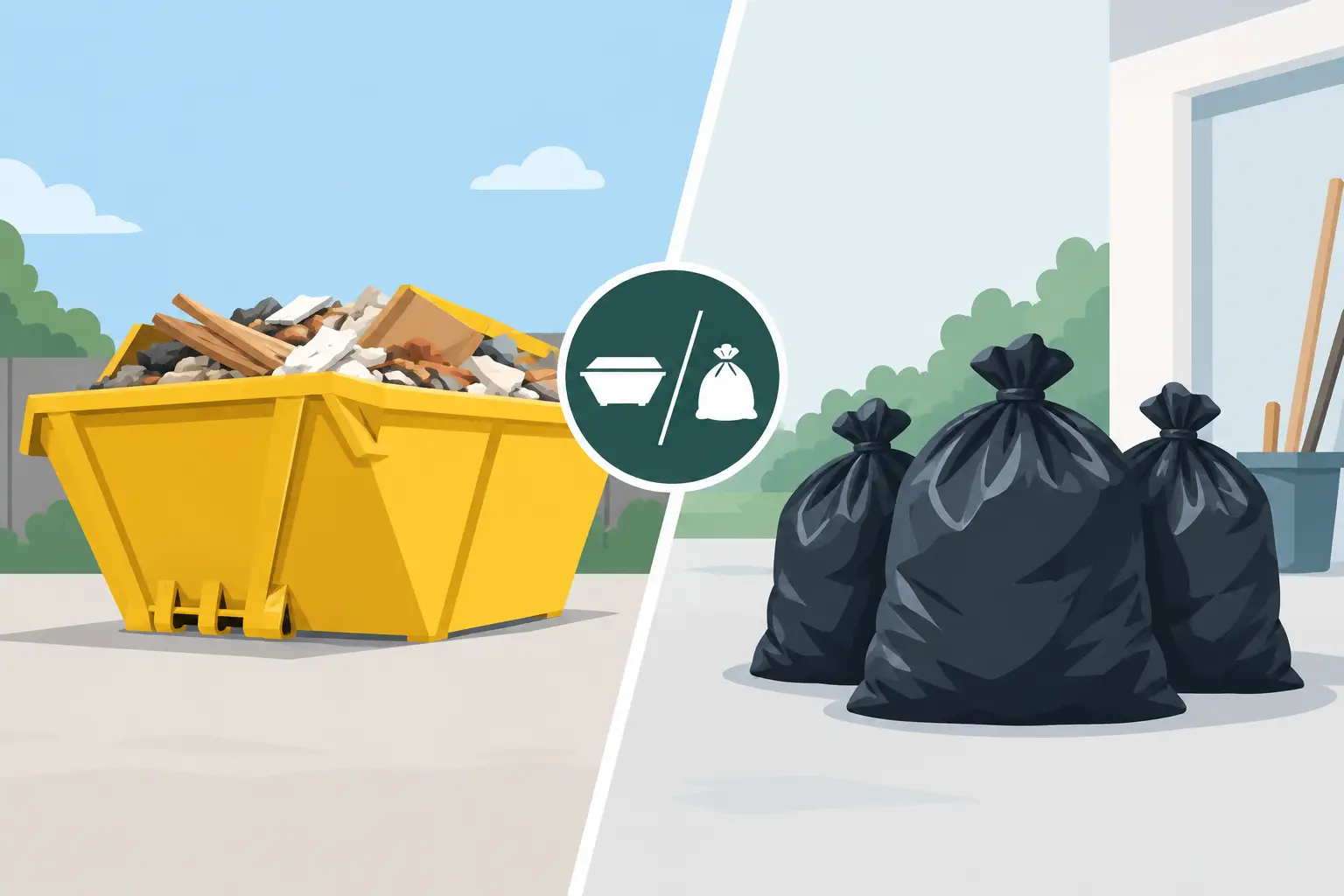
A garage clear-out can start with a few black bags and end with old shelving, broken furniture and a pile of timber by lunchtime. That is where the choice between skip hire versus waste bags matters. Both can make rubbish removal easier, but the better option depends on how much waste you have, where it is stored and how quickly you need the space back.
For households in Sudbury, Colchester, Hadleigh, Ipswich and Bury St. Edmunds, the simplest answer is usually this: use bags for smaller, manageable amounts of rubbish and a skip for a larger job that will build up over several days. The details matter, though, especially if access, parking or renovation waste is involved.
A waste bag is best thought of as a flexible option for light-to-medium household rubbish. You fill strong bags with unwanted items, garden cuttings or general waste, then arrange collection when they are ready. They take up little room before use and can suit jobs where the rubbish is being cleared gradually.
Skip hire gives you a dedicated container for a much bigger volume of waste. It is a practical choice for kitchen rip-outs, bathroom refits, shed removals, landscaping, substantial clear-outs and other projects where rubbish is likely to arrive faster than you can bag it. Instead of making stacks around the garden or driveway, you can load waste as you go.
Neither option is automatically cheaper or better. A few bags may be the sensible, low-cost route for a small clear-out. Trying to force a full room’s worth of furniture, plasterboard and timber into bags, however, can soon become hard work and poor value. Equally, hiring a skip for two bags of hedge trimmings is more capacity than most people need.
Waste bags work well when the job is contained. Perhaps you are clearing a cupboard, sorting a loft, tidying a small garden or getting rid of unwanted household bits before a move. If you can comfortably carry each bag and do not have bulky items taking up all the space, bags keep the job simple.
They are also useful where space is tight. A terraced property, a shared driveway or a home with limited off-road parking may not have a suitable spot for a skip. Filled bags can be kept neatly in a safe place until collection, provided they are not blocking a pavement, entrance or neighbour’s access.
The main benefit is flexibility. You do not need to commit to a large container sitting outside while you decide what is staying and what is going. For a steady declutter over a week or two, bags can feel less disruptive.
There are limits. Heavy materials quickly make bags difficult to move and may not be suitable for collection. Rubble, soil, tiles and wet garden waste add weight surprisingly fast. Sharp timber, long lengths of metal and awkward furniture can also tear bags or make them unsafe to handle. If you are repeatedly filling bag after bag, it is worth stopping to consider whether a skip would save time.
A skip is made for waste that is bulky, frequent or messy. During DIY work, it gives you somewhere to put old units, packaging, timber, doors, carpets and general construction debris as soon as it comes out of the property. That keeps rooms, paths and driveways clearer while the work is under way.
It is particularly helpful for jobs with an unknown final volume. A shed that looks half empty may contain decades of paint tins, broken tools, garden furniture, boxes and rotten wood. A skip gives you breathing room, rather than requiring you to keep guessing how many bags will be needed.
Skip hire also suits people who want one clear loading point. Family members, builders or tradespeople can add waste throughout the job, rather than leaving separate piles for sorting later. Once the skip is full, it is collected and the work area can get back to normal.
A booked drop-off and collection on your driveway can avoid the complication of placing a traditional skip on the road. If a skip needs to sit on a public highway, you may need permission from the local council, and this should always be checked before booking. Private land is often the more straightforward option, but access still needs careful thought.
The amount of rubbish is only one part of the decision. Access can decide what is practical before you have loaded a single item.
For skip hire, check that there is enough room for the vehicle to deliver safely and for the skip to sit without blocking gates, garage access or shared routes. Move cars, bins, pots and low obstacles in advance. If you live on a narrow road or have overhead cables, mention this when arranging the job so the right advice can be given.
For waste bags, think about the collection route. Can the bags be carried from the back garden without going through the house? Are there steps, narrow side passages or loose surfaces? A bag that is easy to fill at the far end of the garden can be much harder to remove once it is full.
Good access saves time, keeps the collection safer and helps avoid last-minute changes. A quick look at your driveway, gate width and parking situation is well worth doing before you book.
The type of rubbish matters as much as the quantity. General household waste, old furniture, garden waste, timber and many DIY materials can often be collected or placed in a skip. But there are items that need separate handling because they can be hazardous or require specialist disposal.
Do not assume that every item can go in a bag or skip. Paint, oils, fuels, gas bottles, batteries, chemicals, asbestos, tyres, fridges, freezers and some electrical items may have different rules. Plasterboard may also need to be kept separate from other waste. If you are unsure, ask before the collection or delivery is arranged. It is far easier to plan for an item properly than to discover it cannot be taken after everything has been loaded.
Garden projects need a little care too. Branches, hedge cuttings and soil may all be suitable in the right circumstances, but soil and hardcore are dense. A small-looking pile can weigh far more than expected. For heavy waste, be honest about what you have so the collection method and skip size are appropriate.
Waste bags can look like the cheaper option because you only pay for the number you fill. For a modest amount of light rubbish, that often is true. The cost can rise, however, if the job needs many bags, if bulky items need separate removal or if you spend extra time breaking everything down to make it fit.
A skip has a higher upfront cost, but it can offer better value for a substantial clear-out or renovation. You know there is room for the waste as the project develops, and you avoid arranging several smaller collections. The right size matters here. Too small and you may need a second skip or collection; too large and you are paying for unused space.
The most useful way to compare prices is to picture the finished pile. Include the old carpet under the bed, the packaging from new furniture, the timber offcuts and the garden waste you have been meaning to tackle. Many jobs produce more rubbish than expected once you begin.
If you want to clear a room in one weekend, a skip can keep the pace up. You can strip out, sort and load without waiting for several bag collections. It is also useful when you have help on site and want everyone to put rubbish in one place.
If your clear-out is less urgent, bags give you a gentler way to work. You can fill them as you sort, avoid having a skip outside for days and arrange removal once you are ready. This suits people who are decluttering around work, family commitments or a house move.
There is also a third option for jobs that do not suit either neatly: a rubbish collection service. If you have mixed bulky items, no room for a skip or simply do not want to carry waste to the kerb, a team can load it for you. This can be particularly useful for furniture, shed contents and difficult access properties.
Choose waste bags if the rubbish is light, limited in volume and easy to carry. Choose skip hire if the work will create a large or ongoing pile, includes bulky materials or needs a single place for loading. If access is restricted or the waste is awkward, ask about a collection instead of trying to make the wrong option fit.
Box Rubbish Removal can help local households choose a practical route for clear-outs, garden jobs and DIY waste. A quick, honest description of the rubbish, access and timing is usually enough to point you in the right direction.
The best choice is the one that lets you get on with the job without rubbish becoming the next problem. Take a photo of the pile, think about what else is likely to come out once you start, and choose the option that leaves your home clear sooner.

Do you need a reliable local rubbish clearance and/or skip hire company in Sudbury or Colchester? Then you’re in the right place.

