

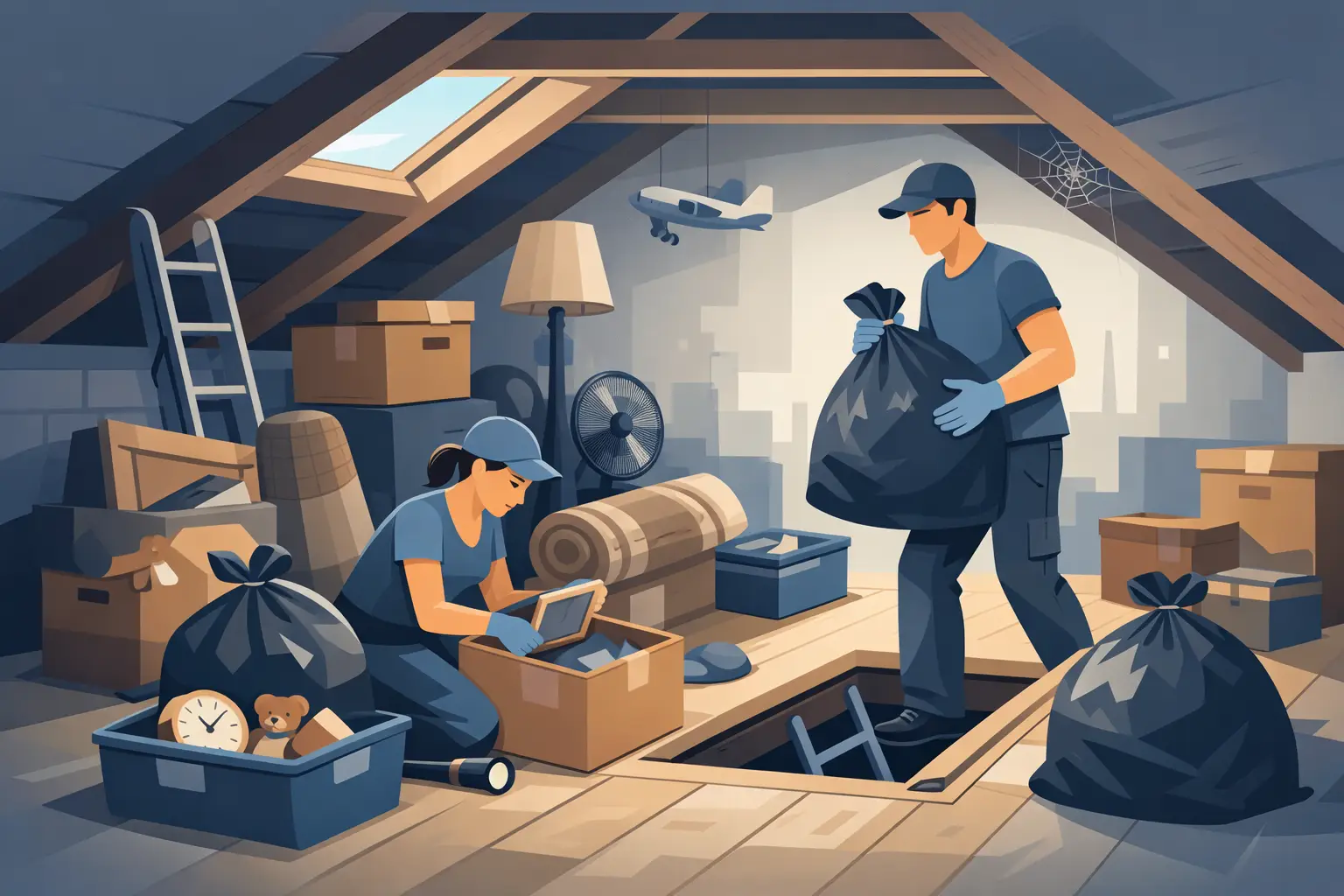
That loft full of old boxes, broken toys, worn-out suitcases and mystery bags rarely gets dealt with at a convenient time. Usually, it becomes urgent when you are moving house, making space, dealing with a clearance after a tenancy, or finally fed up with opening the hatch and seeing years of clutter staring back. If you are wondering how to clear loft rubbish without turning it into a messy, dusty ordeal, the trick is to do it in the right order.
A loft clearance goes wrong when people treat it like a normal room clear-out. It is not. Access is tighter, footing can be awkward, light is often poor, and lofts tend to hold a mix of light clutter and surprisingly heavy items. Add dust, insulation, awkward beams and old stored junk, and the job can become tiring very quickly.
Start by checking access and safety before you touch a single box. Make sure the loft ladder is secure or that you have a proper stepladder in place. If the loft has boarding, check that it is sound. If it does not, avoid stepping between joists. That is one of the easiest ways to damage a ceiling and create a much bigger problem than a bit of rubbish.
Good lighting matters more than most people expect. A torch helps, but a hands-free work light is better because you need both hands free when moving things down safely. Wear gloves, old clothes, and a dust mask if the loft has been untouched for years. It is not about making the job look dramatic. Loft dust, insulation fibres and stale air can be unpleasant in a confined space.
The fastest way to waste time is carrying everything down and sorting it later. A better approach is to split items into clear groups while still in the loft or at the hatch. Keep, donate, recycle and rubbish is usually enough for most households.
Be realistic. A lot of loft contents stay there because nobody wants to make a decision. If something has been up there for ten years, is broken, damp, incomplete or no longer useful, it is probably rubbish. Sentimental items are the main exception, but even then it helps to set a limit. Keep the things that genuinely matter, not every cracked baby gate and obsolete DVD player.
If you are clearing a loft after renovations or after a tenant has moved on, the balance often shifts more heavily towards waste. Old paint tins, bits of timber, damaged carpet, rusty tools, curtain poles, packaging and general household junk can all build up. In that case, separating general rubbish from anything reusable will make the disposal side much easier.
Not everything in a loft can go out with general household rubbish. This is where many people get caught out, especially when trying to do a full clear in one day.
Electricals, old televisions, small appliances and cables should be separated from ordinary waste. Paint, chemicals, solvents, asbestos-containing materials and certain building waste also need proper handling. If you come across insulation offcuts, crumbling boards, or anything you suspect could be hazardous, stop and check before moving it around. Guessing is not worth the risk.
There is also the weight issue. Loft rubbish often looks light because it is boxed up, but old books, paperwork, tools and stored decorations can add up quickly. Taking down too much at once is how people end up dropping items, straining their back, or damaging the stairs.
A steady pace usually wins. Bring things down in manageable loads, stack them in one area, and keep the route to the front door clear. If you block your hallway halfway through, the whole job starts to feel harder than it needs to.
This is where it really depends on the job. A few bags and a couple of unwanted items can often be handled as part of a normal household clear-out. A loft packed with years of stored junk is different.
If you only have a small amount, you may be able to bag it up, separate recyclables and take your time. If the loft is full, or if the rubbish includes bulky items, broken furniture, renovation debris or mixed waste, you will usually save time by arranging proper collection or skip hire.
The reason is simple. Loft clearances are tiring before the waste has even left the house. Once you have brought everything down, the last thing most people want is a queue at the tip, several car loads, and uncertainty about what can go where. For larger jobs, getting the waste removed in one go is often the easier and more cost-effective choice.
For local households in places such as Sudbury, Colchester, Hadleigh, Ipswich and Bury St. Edmunds, this is often where a booked rubbish collection makes more sense than trying to string the job out over several weekends.
If you want to keep the job affordable, the answer is not always doing every part yourself. It is reducing wasted effort.
The first way to save money is to separate obvious recyclables and reusables from true rubbish. If half the loft contents are things that could be donated or set aside for family, your waste volume drops straight away. The second is to be honest about scale. Hiring a small solution for a large job often ends up costing more because you need extra collections, extra trips or extra time off.
It also helps to check whether there are items that can be grouped with other household waste. Many loft clearances are not just loft clearances. They uncover old garden tools, bits from the shed, broken chairs from a spare room, and leftover DIY debris. Dealing with everything together can be more practical than treating each area as a separate job.
The biggest mistake is rushing. People often start with good intentions, pull everything into the middle of the loft, create a dusty mountain of mixed items, then realise they have nowhere for it to go. At that point, the house feels worse, not better.
Another common mistake is underestimating access. Narrow hatches, steep ladders and awkward turns on the staircase can make bulky items harder to remove than expected. An old chair frame or a large suitcase may fit into the loft easily enough years ago, but getting it back out is not always straightforward.
Then there is the issue of overfilling bags. Loft rubbish compacts badly. A bag stuffed with mixed junk, old paper and odd metal pieces can split halfway down the ladder. Smaller, stronger loads are safer and easier to handle.
People also tend to leave the dusty final layer until last and run out of steam. Once the obvious rubbish is gone, there is usually still loose debris, old insulation bits, cobwebs and small broken items left behind. That last tidy-up is what makes the loft usable again.
There is no prize for struggling through a difficult loft clearance alone. If you are dealing with heavy items, limited mobility, a rental property turnaround, bereavement clearance or a loft packed with mixed waste, help is usually the sensible option.
A good local service should make the process straightforward. You want clear communication, realistic advice on what can be taken, and a simple booking process. You also want confidence that the waste is being handled properly. That matters whether you are clearing a family home, getting a property ready for sale, or making space before new insulation or boarding is fitted.
For many households, the ideal approach is a mix of both. Keep what matters, set aside anything reusable, then have the rubbish removed properly so the job is finished in one go. That is often far less stressful than trying to do every stage yourself.
The obvious benefit is space, but it is not just about square footage. A cleared loft makes it easier to check for leaks, insulation issues or pests. It gives you better access for electricians or fitters. It also stops the loft being a dumping ground for the next five years.
More than that, it removes that low-level household job that sits in the background and keeps getting postponed. Once it is done, it is done.
If you are working out how to clear loft rubbish, keep it simple. Sort carefully, lift safely, separate anything that needs special disposal, and be honest about whether the amount of waste is manageable. A loft clear-out should leave your home feeling lighter, not leave you with a bigger mess on the landing.

Do you need a reliable local rubbish clearance and/or skip hire company in Sudbury or Colchester? Then you’re in the right place.

