

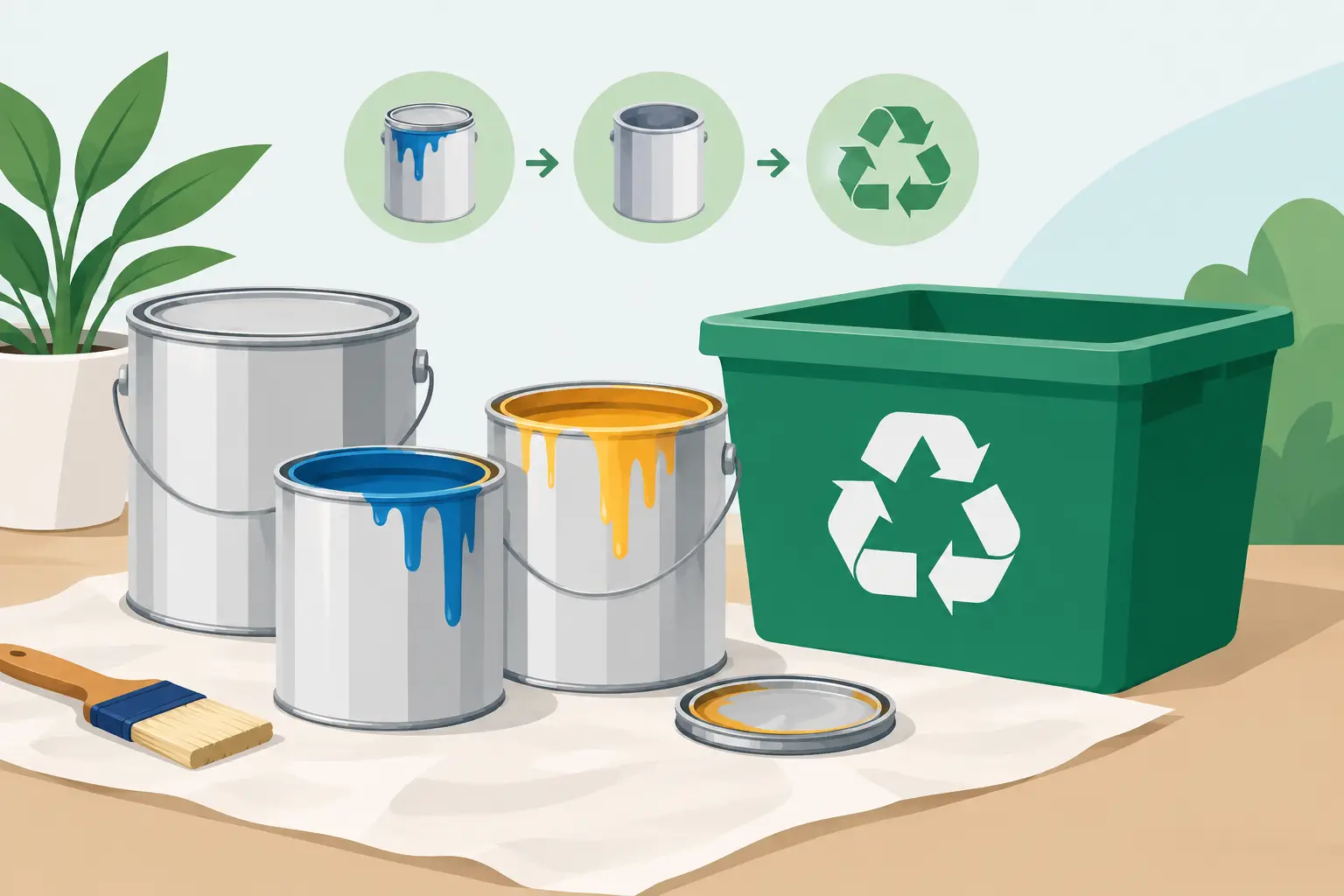
A finished decorating job often leaves one awkward question behind: what do you do with the tins? Whether you have a single half-empty tin from touching up the hallway or a stack left over from a full renovation, it pays to handle them properly. To recycle paint tins safely, you need to know whether they are empty, dry, still usable or holding liquid paint.
The simple rule is this: metal tins can often be recycled once they are completely empty and dry. Tins containing wet paint need a different route. Do not put them straight into your household recycling bin, tip paint down the sink or leave open tins by the kerb. A little preparation keeps the job clean, avoids contamination and helps make sure the waste is dealt with properly.
Usually, no. Although many paint tins are made from steel, kerbside recycling collections do not always accept them. Rules vary between local councils, and a tin that still has wet paint inside can contaminate other recyclable materials.
Check the guidance for your local collection before placing an empty tin in a recycling box or bin. If tins are accepted, they normally need to be empty, with no liquid paint or loose residue inside. Some areas may also ask you to remove plastic handles or lids, while others can process them with the tin.
For households in Sudbury, Colchester, Hadleigh, Ipswich and Bury St. Edmunds, the most reliable approach is to check local rules first rather than assume all metal packaging is treated the same. If you are clearing a property or dealing with several tins at once, a booked rubbish collection can save repeated trips and uncertainty over what goes where.
The condition of the paint tin matters more than the tin itself. An empty tin with a thin, hardened coating of paint is very different from one that is half full of liquid emulsion, gloss or primer.
If the tin is empty and the remaining paint has dried solid, it may be suitable for metal recycling, depending on the local facility or collection scheme. Leave the lid off until the inside is fully dry, then replace it loosely for transport if needed. Wipe away any drips on the outside so it can be handled cleanly.
Do not rinse paint tins under the tap. Even water-based paint should not be washed into drains. The waste can enter the drainage system, and washing also creates contaminated water that has to be dealt with separately.
If the paint is still in good condition, using it is often the best option. Keep it for touch-ups if it is a colour you will need again, particularly for skirting boards, doors or a room likely to get scuffed.
Store the tin in a cool, dry place away from frost and direct heat. Seal the lid tightly by placing a piece of film or plastic over the opening before tapping the lid down. Write the room, colour and date on the tin so you know what it is later. A tin labelled simply “white” is rarely much help six months after the decorating is finished.
If you will not use it, consider passing usable paint to someone who can. A neighbour, relative, community project or local reuse scheme may be glad of it, but only offer paint that is clearly labelled and still in usable condition. Never pass on a tin that has gone lumpy, separated badly or has an unknown contents.
Wet paint cannot normally go into general recycling. The safest option depends on the type and amount of paint. Some household waste recycling centres accept paint, while others have restrictions on quantities or paint types. Oil-based paint, solvent-based products, varnishes and certain specialist coatings may need separate handling.
Do not mix different paints together in one container to make disposal easier. Mixing products can create a mess, make reuse impossible and complicate treatment. Keep tins closed and upright until you have confirmed the right disposal route.
For a small amount of leftover water-based emulsion, it may be practical to let it dry out fully before disposal. Only do this in a well-ventilated area, out of reach of children and pets, and where spills will not cause damage.
Remove the lid and allow the paint to harden naturally. If there is more than a thin layer left, mix in an absorbent material such as cat litter, sawdust or soil until the paint becomes solid. Once it is completely dry, the hardened paint may be accepted with general waste, while the clean metal tin may be recyclable through the appropriate local route.
This method is best for small quantities of water-based paint. It is not a good answer for large tins, oil-based paints or unknown products. In those cases, keep the tin sealed and ask the recycling centre or a licensed waste operator what they can accept.
Paint waste is easy to underestimate because each tin seems small. The problems usually start when people try to get rid of it quickly. Avoid these common mistakes:
Apart from being messy, these options can cause pollution, create risks for collection crews and lead to rejected loads. Keeping paint contained is the sensible first step, even if you are in the middle of a larger clear-out.
A few minutes of preparation makes transport safer and easier. Keep every tin upright and make sure the lid is secure. If a lid is loose, tape around the edge rather than relying on the handle alone. Place tins in a sturdy box or tray lined with newspaper or cardboard to catch any small drips.
Label tins if you know what they contain, especially if you are taking several products together. Separate paint from other renovation waste where possible. A box of sealed tins is far easier to assess than paint buried among broken tiles, plasterboard and general rubbish.
If you are hiring a skip or booking a collection, tell the provider about paint before the job is arranged. Paint and other liquid or potentially hazardous materials often have different acceptance rules from ordinary household rubbish. Being clear at the start prevents delays on the day and helps ensure the waste goes through the right route.
A trip to the tip is fine for one or two suitable tins if you have the time, a suitable vehicle and know the site will accept them. It is less appealing when you are clearing a shed, finishing a refurbishment or emptying a rental property. You may also have old brushes, rollers, dust sheets, packaging, timber and other waste to move at the same time.
That is where a local collection can be more practical. Box Rubbish Removal provides straightforward household waste collections and skip hire across the local area, but paint tins should always be mentioned when requesting a quote or making a booking. Acceptance depends on whether the tins are empty, dry or contain wet paint, as well as the type of product.
A clear description and a quick photo, where requested, can help avoid surprises. It means the right advice can be given before collection, rather than leaving you with items that cannot be loaded.
Before you throw every tin away, keep a modest amount of each colour used in your home. It can save you from buying a full new tin after a scrape from moving furniture or a mark on the wall. Just make sure it is labelled properly and stored safely.
For everything else, take the steady approach: use what you can, pass on good paint where appropriate, dry out small amounts of water-based paint carefully, and check the disposal route before loading up. A little care with old tins keeps your decorating clean-up simple and your waste handled responsibly.

Do you need a reliable local rubbish clearance and/or skip hire company in Sudbury or Colchester? Then you’re in the right place.

