

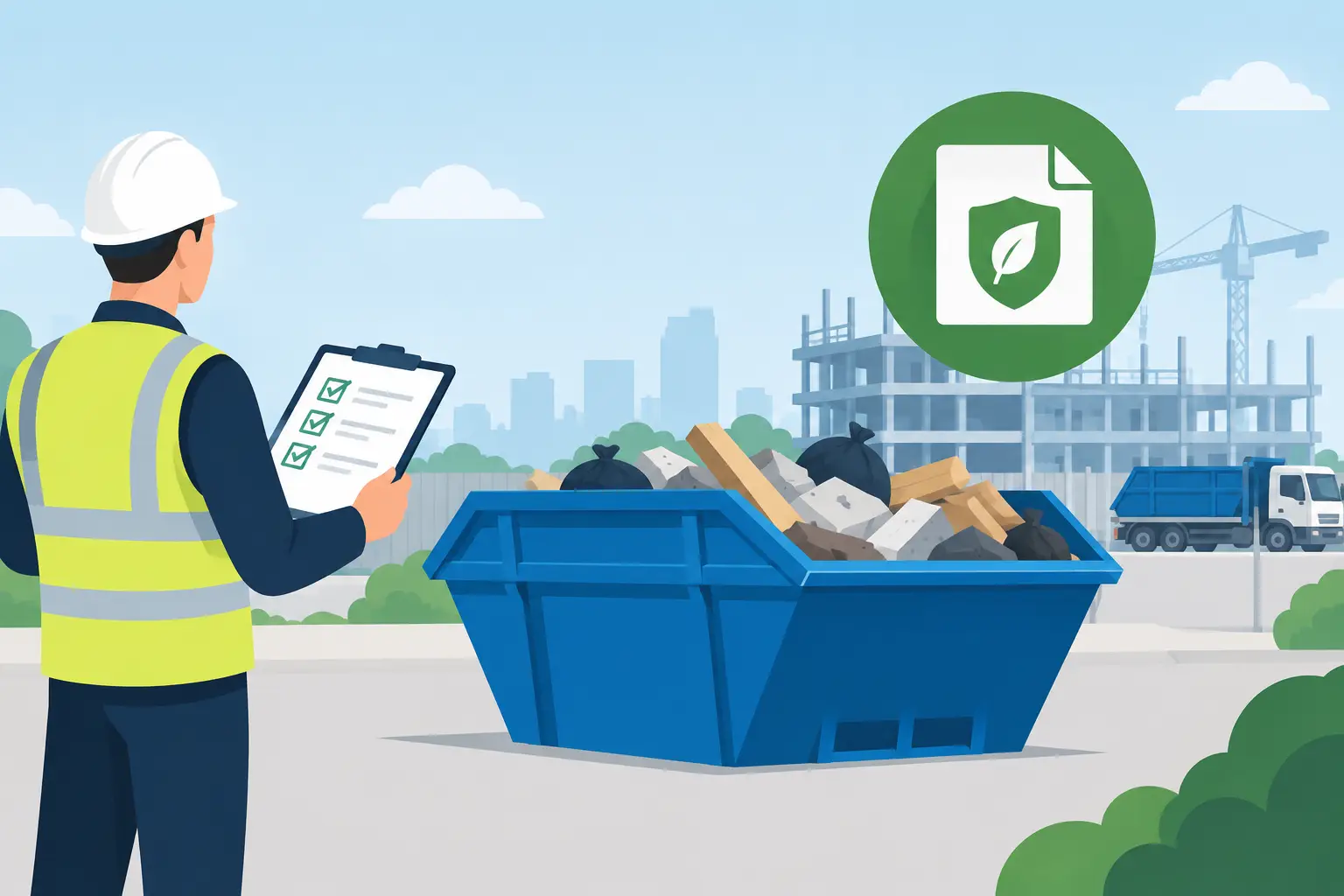
A skip is an easy answer to a clear-out, garden overhaul or renovation job, until you realise it needs to sit on the road. That is where waste permits come in. If your skip is going on a public highway rather than private land, you will usually need permission from the local council before it arrives.
The good news is that many household jobs can avoid the extra cost, paperwork and waiting time altogether. A skip placed fully on your own drive or private land will not normally need a highway permit. It is a simple difference, but one worth checking before you book.
In this situation, a waste permit is usually called a skip permit or highway permit. It gives permission for a skip to be placed on a road, pavement or other part of the public highway for an agreed period.
The council uses the permit to make sure the skip is positioned safely and does not create unnecessary risk for drivers, cyclists or pedestrians. Conditions can cover where it sits, how long it can stay, the lights or markings it needs, and whether it must be covered when not in use.
It is not the same as an Environment Agency waste carrier licence. A reputable rubbish removal company needs the correct licence to carry and dispose of waste responsibly. A highway permit is about the location of the skip.
You will generally need a permit if any part of the skip will be on public land. That includes the road outside your house and, in most cases, a public pavement or verge. It does not matter that the space is directly outside your property. If it is maintained as public highway, it is not private parking.
You will normally not need one when the skip fits entirely on your driveway, within a front garden with suitable access, or on other private land where you have permission to place it. For tenants, that may mean checking with the landlord or managing agent first. For shared drives and private roads, it is sensible to confirm who owns the land and whether there are any site rules.
The key word is entirely. If the skip overhangs the pavement or sticks out into the road because the drive is too short, a permit may still be required. Measure the available space before arranging delivery, including room for the lorry to get in and out safely.
If you are clearing a shed in Ipswich and have a clear driveway, a booked skip placed on that driveway can usually arrive without the council permit process. If your driveway is full of cars and the only practical position is the kerbside, allow time for a highway permit before choosing your delivery date.
For a large refurbishment in a terraced property in Colchester or Sudbury, roadside space can feel like the only option. It may be, but it is worth considering a collection service instead. A team can load the waste from your property without leaving a skip outside for days.
Council rules, costs and processing times vary by area. Some applications can be dealt with quickly, while others need several working days’ notice. Bank holidays, seasonal demand and roadworks can all affect what is possible.
A permit can also be refused or restricted where there is limited road width, a bus route, parking controls, a junction nearby, or safety concerns around schools and pedestrian crossings. You may need to use a specific space or arrange the skip for a shorter period than planned.
This does not mean roadside skips are a bad option. For a major project with a steady flow of bulky waste, they can be very useful. The trade-off is that they need more planning than a driveway skip or a rubbish collection.
This depends on the skip provider and the council area. Some skip hire companies arrange the permit as part of the booking and add the council charge to the cost. Others ask the customer to apply directly. Never assume it is included without asking.
Before booking, find out who is responsible for the application, how much it costs, how long approval is likely to take, and what happens if the permit cannot be granted. It is also worth checking whether the price includes any required lights, cones or covers.
Be accurate about where you want the skip placed. Moving it from a driveway to the road after delivery may create a permit problem, even if it is only for a short time. Clear communication at the start prevents a frustrating delay on collection day.
If you have off-road space, placing a skip on your drive is often the most straightforward route. There is no need to wait for a highway permit, and you have more control over when it is filled and collected.
Think practically before choosing this option. Check the width and length of the drive, low branches, gates, overhead cables and parked vehicles. A skip lorry needs safe access, not just enough room for the skip itself. If you are concerned about the surface, ask about using boards to help protect the drive, although no method can remove every risk on older or delicate surfaces.
A drive-based skip suits jobs where you can load waste over a few days, such as sorting a garage, replacing kitchen units or cutting back an overgrown garden. Keep it accessible for collection and do not overfill it. Waste should sit below the top edge so it can be transported safely.
A skip is not always the best value or the easiest option. If your waste is already piled up, you have no driveway, or you do not want a container outside the house, a collection can be quicker and less complicated.
This can work particularly well for shed contents, furniture, bagged household rubbish, garden cuttings and renovation debris. You show the team what needs to go, they load it, and the space is cleared. There is no need to guess how long you need the skip for or worry about neighbours adding their own rubbish overnight.
For smaller jobs, collection may also prevent you paying for unused skip capacity. For very heavy materials or a full house clearance, the right choice depends on volume, access and how quickly the waste is likely to build up. A free, no-obligation quote gives you a clearer comparison.
A permit does not make every type of waste acceptable. Most general household, garden and non-hazardous building waste can be handled, but certain materials need separate arrangements because they require specialist disposal.
Do not assume items such as paint, gas bottles, tyres, batteries, asbestos, chemicals, electrical goods, fridges or fluorescent tubes can go into a general skip. Rules can differ by provider and waste type, so ask before loading. The same applies to soil, rubble and plasterboard, which may need to be kept separate or may affect the size and type of skip you need.
Using a licensed operator matters here. It helps ensure your rubbish is taken to the proper facility rather than being fly-tipped, which can leave the original householder facing questions and possible penalties.
The quickest way to avoid permit trouble is to decide where the skip will sit before you choose a date. Measure your drive, consider lorry access, and be honest about whether the job needs roadside space. If it does, ask about the permit early rather than hoping it can be sorted on the morning of delivery.
For households across Sudbury, Colchester, Hadleigh, Ipswich and Bury St. Edmunds, Box Rubbish Removal can help make the practical side easier with booked skip drop-off and collection, or a straightforward rubbish removal service where a skip is not the right fit. A little planning at the start keeps the clear-out moving and lets you focus on getting the job finished.

Do you need a reliable local rubbish clearance and/or skip hire company in Sudbury or Colchester? Then you’re in the right place.

